Understanding Engine Coupler Spline Wear and Prevention in MerCruiser & Volvo Penta Systems
"A deep technical dive into the tribology and mechanics of spline hub wear, backlash development, and operational best practices."
In sterndrive marine engineering, power is transferred from the engine's drive coupler to the sterndrive input shaft through a mating set of involute splines. This male/female connection allows for minor axial movement during operation while transmitting the engine's torque output.
However, spline hubs are frequently subject to severe premature wear, a process known as fretting corrosion. Understanding the mechanical causes of this wear allows fleet managers and distributors to minimize warranty claims and design better preventative maintenance procedures.
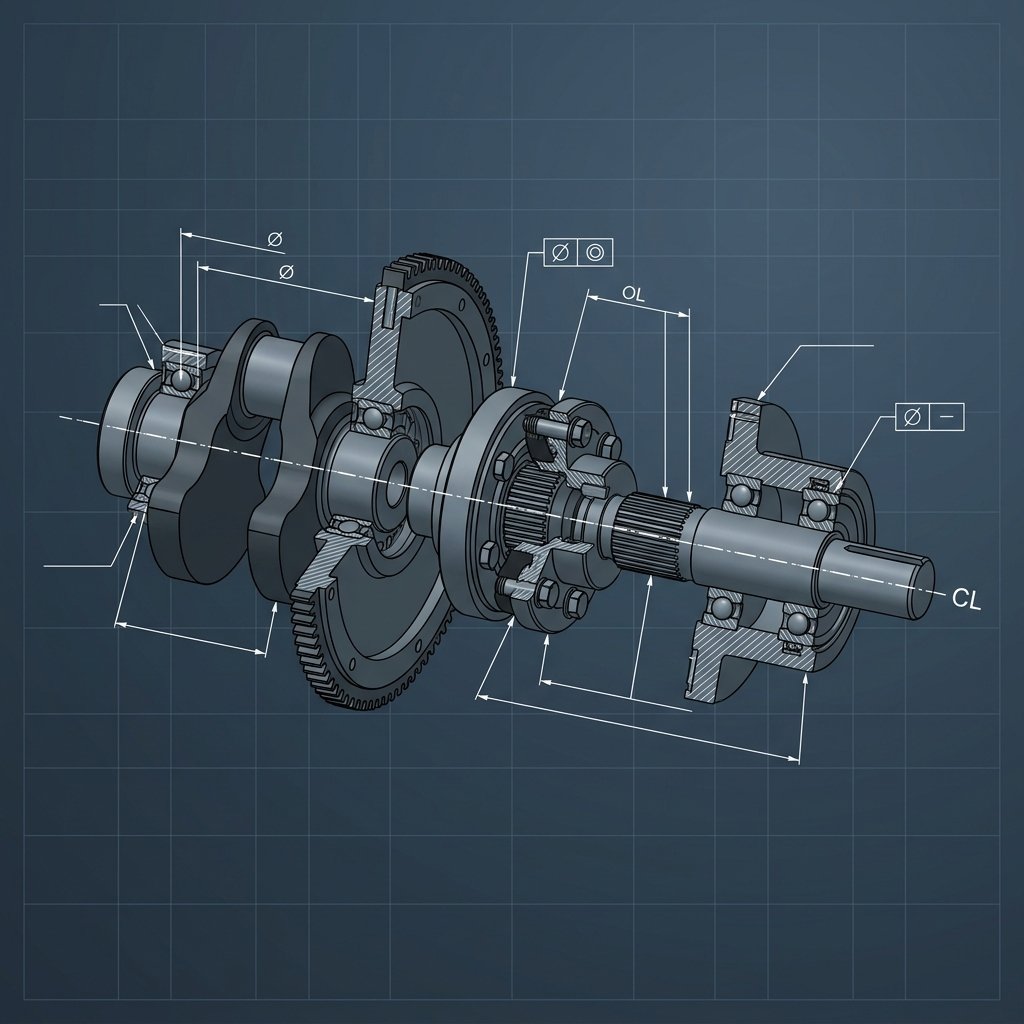
3D CAD Drivetrain Concentric Alignment Schematic
The Mechanics of Spline Wear (Fretting & Backlash)
When a sterndrive is installed, the input yoke shaft (external splines) slides into the coupler's aluminum or steel inner sleeve (internal splines). If the driveline alignment is within specification, torque is distributed more evenly across the spline teeth.
However, if there is even minor angular or parallel misalignment, the shafts will undergo slight cyclic deflection relative to each other during continuous rotational operation. At 3,000 RPM, this represents 3,000 micro-motion cycles per minute, exposing the metal surfaces to repeated micro-contact wear.
- Fretting Corrosion: The microscopic sliding wears away the protective surface oxides on the metal teeth. The resulting metal powder oxidizes, creating abrasive debris (red rust-like powder) that accelerates wear.
- Backlash Development: As the metal teeth wear thin, the gap between the male and female splines grows (backlash). During gear shifting or acceleration changes, this backlash causes shock-loading, which rapidly strips the remaining teeth.
Field Diagnostics: Identifying Spline Wear Patterns
During annual sterndrive maintenance, experienced marine technicians perform visual inspections to read wear patterns before total spline stripping occurs:
- Fretting Dust (Red Oxide Powder): The presence of a fine, red rust-like powder inside the coupler housing is a definitive sign of fretting corrosion. This dust consists of microscopic steel particles worn away from the teeth that have oxidized under micro-motion.
- Uneven Tooth Polishing: Shine patterns or uneven wear scars isolated to one section of the spline teeth indicate parallel or angular misalignment. Concentric wear should be uniform; offset polishing indicates that the input shaft is binding asymmetrically.
- Contaminated Grease Inspection: Grease that has turned black and gritty indicates metal particle contamination and lubrication breakdown, necessitating immediate spline cleaning, wear checking, and re-greasing.
Comparison: Aluminum vs. Steel Spline Hubs
Different engine coupler designs use different materials for the inner spline sleeve, depending on the engine's torque rating:
- Aluminum-Based Spline Hubs: Commonly utilized in legacy or lower-torque sterndrive applications (e.g. standard inline 4-cylinder configurations). While offering lower rotating mass, aluminum splines are highly sensitive to micro-friction and alignment variances, requiring careful maintenance.
- Steel Spline Hubs: Utilized in high-torque V8 configurations and heavy-duty drive series (e.g., MerCruiser Bravo or Volvo Penta SX and DPS series). Machined structural steel splines offer high wear resistance and yield strength, but require careful alignment control and proper lubrication to mitigate high-load fretting.
Preventative Guidelines for Fleet Operators
- Annual Spline Lubrication: The sterndrive should be pulled annually. Clean the splines of old grease and debris, inspect for tooth thinning, and apply a thick coat of high-temperature, water-resistant marine coupler spline grease (typically containing molybdenum disulfide).
- Gimbal Bearing Check: A worn or damaged gimbal bearing will force the input shaft off-center, causing accelerated angular wear on the coupler splines. Replace the gimbal bearing if any roughness is felt when spinning it by hand.
- Verify Engine Mount Integrity: Wooden stringers can rot or lag bolts can loosen, allowing the engine to tilt. Always check the lag bolts and adjust the double-nut engine mounts to secure correct shaft height.
Engineering-Grade Replacement Sourcing
Technical replacement parts undergo controlled manufacturing from select structural alloys under rigorous thermal treatments. This process is designed to support consistent surface hardness and wear resistance under repeated loading conditions for long-term aftermarket service durability.
Need replacement couplers in bulk?
Contact JOMIDA sales team to receive catalog pricing & samples terms.